This weekend Formula 1 returns to the track for the final race of the 2025 season. As tradition dictates, the circus heads to Abu Dhabi for the season-ending Grand Prix, with three drivers still in contention for the title. Norris leads the standings, followed by a surprising Verstappen and McLaren’s other driver, Piastri. The trio are separated by just 16 points, setting up a finale that is still wide open.
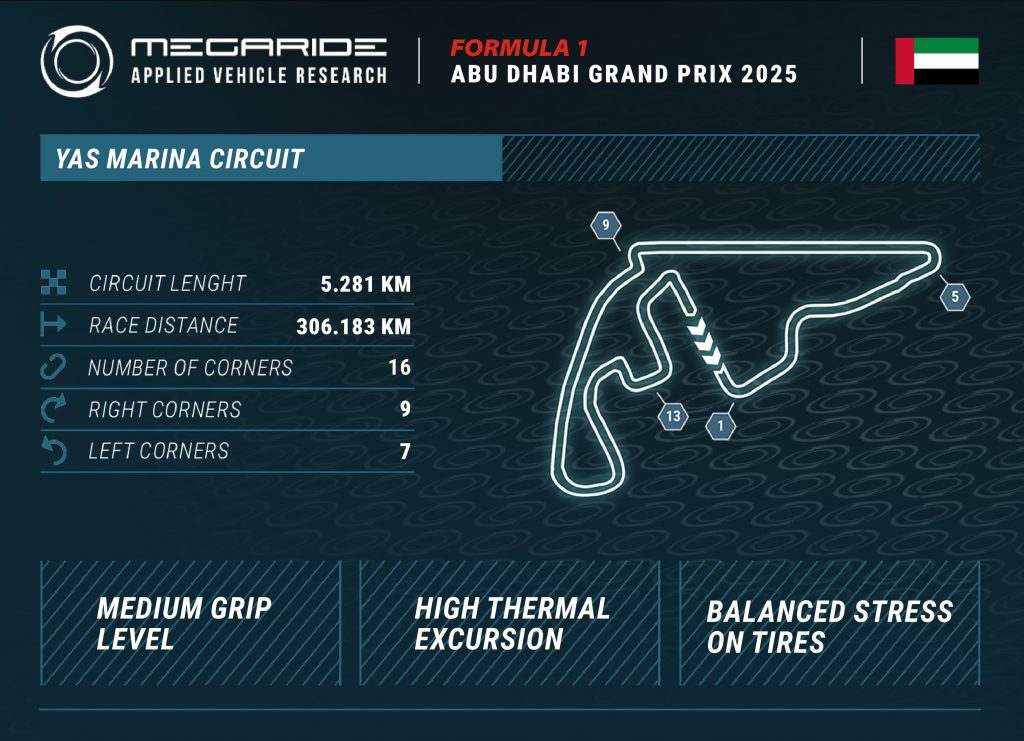
The Abu Dhabi circuit is highly balanced: lateral and longitudinal loads are very similar, without heavily compromising top speed. The track demands a well-balanced car to tackle the technical section effectively and to maximize performance along the straights, which provide the limited overtaking opportunities.
MEDIUM GRIP LEVEL | HIGH THERMAL EXCURSION| BALANCED STRESS ON TIRES
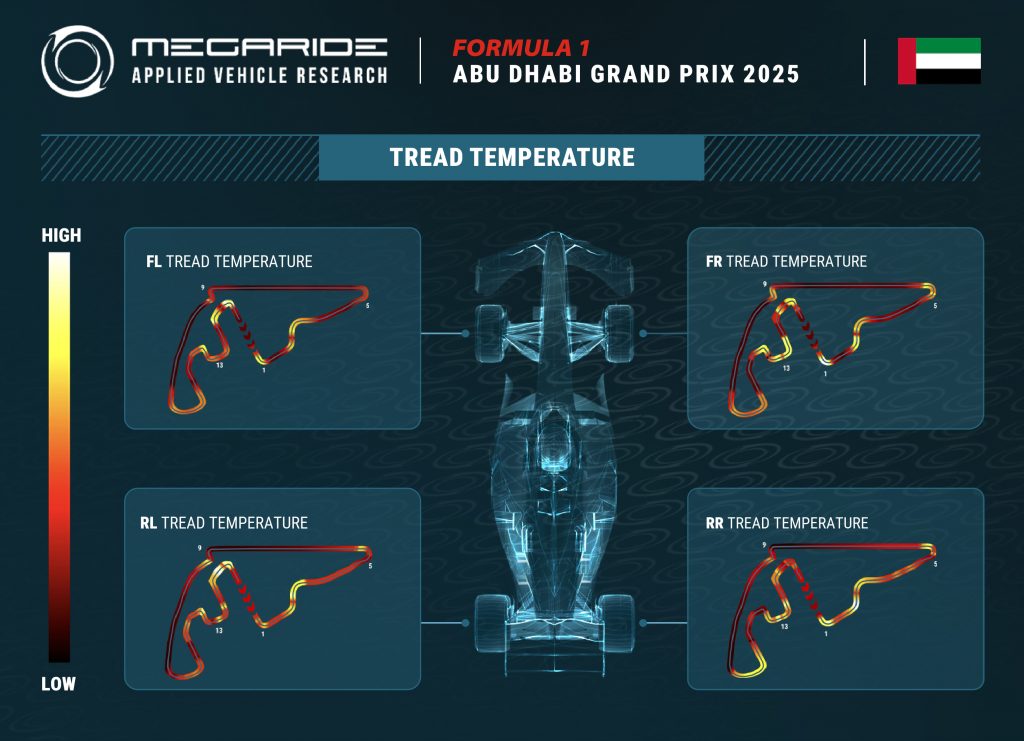
· The temperature plot highlights moderate overall stress and a broadly even distribution across all four tires, with the right-hand side slightly more loaded. Particular attention should be paid to temperature variations between sessions and during the race, as these can significantly alter tire behavior.
· Pirelli confirms last year’s selection, bringing the C3–C4–C5 compounds to strike the right balance between grip, durability and strategic flexibility.
· Expected grip is medium, but as often on this type of circuit, significant track evolution is anticipated across the weekend, helped by the final round of the F2 season.
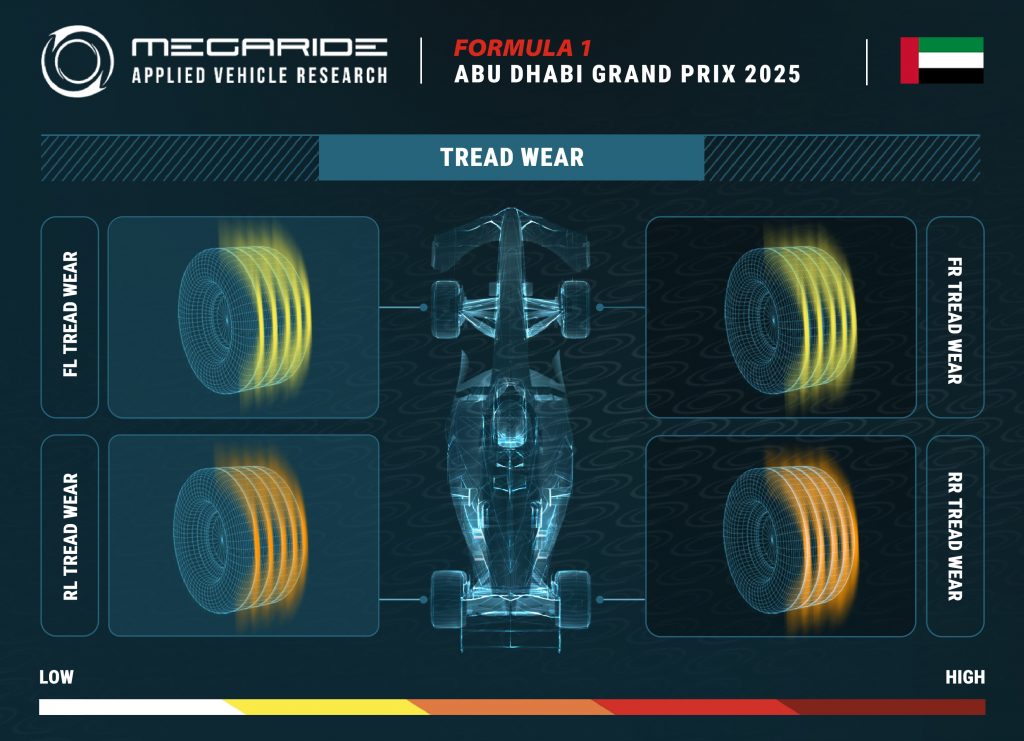
Although lateral loads are not negligible and longitudinal demands can be medium-to-high, expected wear around this track is medium-to-low. Tire management remains crucial, especially given the forecast thermal swings across sessions and throughout the race. Overtaking opportunities do exist thanks to the long straights, but pit-wall strategy will be decisive. A potential safety car remains another key factor, capable of disrupting and reshaping strategies.